
Chronic Venous Disease & Insufficiency
Understanding Chronic Venous Insufficiency & Venous Reflux
Chronic Venous Insufficiency (CVI) is a condition where the veins in the legs are not able to return blood effectively back toward the heart. Over time, this may lead to increased pressure within the veins, contributing to symptoms such as swelling, heaviness, skin changes and discomfort in the legs.
Varicose veins are commonly associated with chronic venous insufficiency and are often caused by underlying venous reflux, where blood pools within the veins due to malfunctioning vein valves.
While some patients may notice visible varicose veins, others may primarily experience swelling, aching, skin irritation or changes in the lower legs and ankles.
At Better Veins Clinic, Dr Nicholas Teo provides doctor-led assessment of chronic venous insufficiency and related venous conditions on the Gold Coast, Brisbane and Toowoomba.
Common Symptoms of Chronic Venous Insufficiency
Symptoms may include:
- Leg heaviness or fatigue
- Aching or discomfort
- Swelling around the ankles or lower legs
- A feeling of tightness or pressure
- Night cramps
- Restless legs
- Itching or irritation
- Visible varicose veins
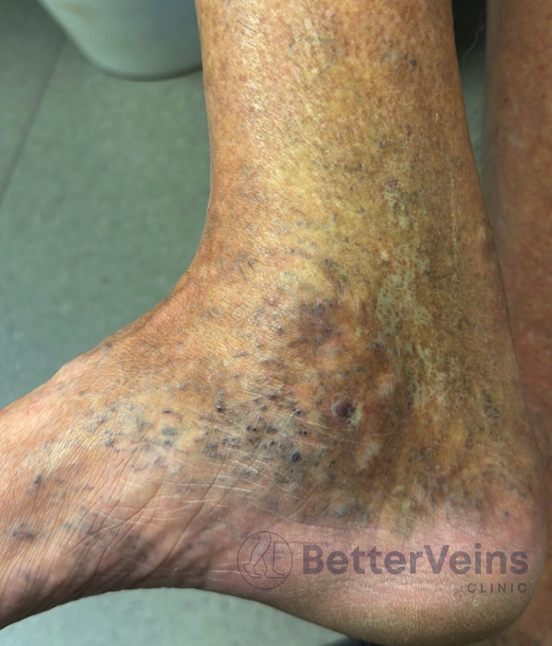
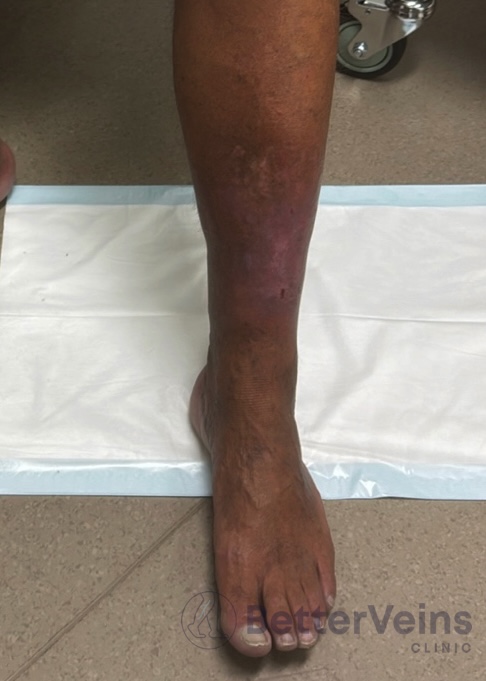
- Skin discolouration or darkening
- Skin thickening or hardening
- Slow-healing wounds or ulcers in advanced disease
Symptoms often worsen later in the day or after prolonged standing.
Swelling, Veins & The Lymphatic System
In some patients, chronic venous insufficiency may contribute not only to swelling, but also place additional strain on the lymphatic system over time.
Venous and lymphatic conditions can sometimes overlap, particularly in more advanced or longstanding disease. Chronic venous insufficiency may coexist with conditions such as lymphoedema and lipoedema, and underlying venous reflux may contribute to worsening swelling, heaviness and discomfort in some patients.
Some patients may therefore have multiple contributing factors to their symptoms at the same time, including:
- Varicose veins
- Chronic venous insufficiency
- Lymphoedema
- Lipoedema
- Chronic swelling from other medical causes
Understanding these overlapping contributors is an important part of comprehensive assessment.
To learn more, visit our:
- Swollen Legs page
- Varicose Veins page
- Lymphoedema page
- Lipoedema page
What Is Chronic Venous Insufficiency?
The veins in the legs contain one-way valves that help blood travel upward against gravity. When these valves become weakened or do not function effectively, blood can pool within the veins — a process commonly referred to as venous reflux or venous insufficiency.
Over time, this increased venous pressure may contribute to inflammation, swelling and changes within the skin and surrounding tissues.
Chronic venous insufficiency exists along a spectrum and may range from mild symptoms through to more advanced skin changes or ulceration in some patients.
Skin Changes & Advanced Venous Disease
Longstanding venous insufficiency may affect not only the veins themselves, but also the skin and surrounding tissues.
Changes may include:
- Venous eczema
- Brown skin staining from iron deposition
- Lipodermatosclerosis (hardening or tightening of the tissues)
- Atrophie blanche
- Chronic inflammation and fibrosis
- Venous ulceration
These changes can sometimes develop gradually over many years and may be mistaken for other skin conditions.
Assessment of Chronic Venous Disease
Because symptoms and severity can vary significantly between individuals, a thorough assessment is important.
This may include:
- Detailed medical history
- Physical examination
- Duplex ultrasound assessment of the venous system
- Evaluation of venous reflux and circulation
- Assessment of swelling, skin changes and surrounding tissues
- Consideration of other contributing medical or lymphatic factors where appropriate
Ultrasound assessment helps evaluate not only visible veins, but also the deeper venous circulation and underlying contributors to symptoms.
Management Options
Management depends on the severity of disease, ultrasound findings, symptoms and individual patient factors.
Treatment is tailored to the individual patient and may involve a combination of conservative measures, lifestyle strategies and minimally invasive venous procedures where appropriate.
Minimally Invasive Venous Procedures
Where appropriate, treatment of underlying venous reflux may help improve symptoms and reduce ongoing venous pressure within the legs.
Treatment options may include:
Endovenous Laser Ablation (EVLA)
A minimally invasive ultrasound-guided procedure used to treat underlying refluxing veins using thermal energy delivered through a fine laser fibre.
Ultrasound Guided Sclerotherapy
A minimally invasive injection treatment performed under ultrasound guidance to target abnormal veins contributing to venous insufficiency.
Microsclerotherapy
A treatment commonly used for smaller superficial or spider veins in selected patients.
Not all patients require procedures, and treatment recommendations are individualised based on symptoms, examination findings and ultrasound assessment.
Comprehensive Venous Assessment
At Better Veins Clinic, asessments focus on understanding the broader contributors to venous symptoms through a comprehensive and holistic approach.
This includes evaluation of venous circulation, swelling, skin changes and potential overlapping venous or lymphatic factors where appropriate.
Clinics are available on the Gold Coast, Brisbane and Toowoomba.
Conservative Management
For many patients, conservative measures play an important role in managing symptoms and supporting venous circulation.
This may include:
- Compression therapy and compression garments
- Walking and calf muscle activation
- Regular movement and avoiding prolonged sitting or standing where possible
- Leg elevation
- Weight management where appropriate
- Exercise and lifestyle measures
- Skin care and moisturisation
- Swelling management strategies
In some patients, these measures may help improve comfort, reduce swelling and support long-term vein and skin health.
Conservative management may be used alone or alongside procedural treatment depending on the individual patient and severity of disease.
When Should You Seek Assessment?
Medical review may be appropriate if you experience:
- Persistent swelling
- Heavy or aching legs
- Skin staining or irritation around the ankles
- Varicose veins with symptoms
- Skin thickening or tightening
- Slow-healing wounds
- Recurrent cellulitis
- Ongoing symptoms despite compression stockings
Sudden swelling, chest pain or shortness of breath should be assessed urgently.